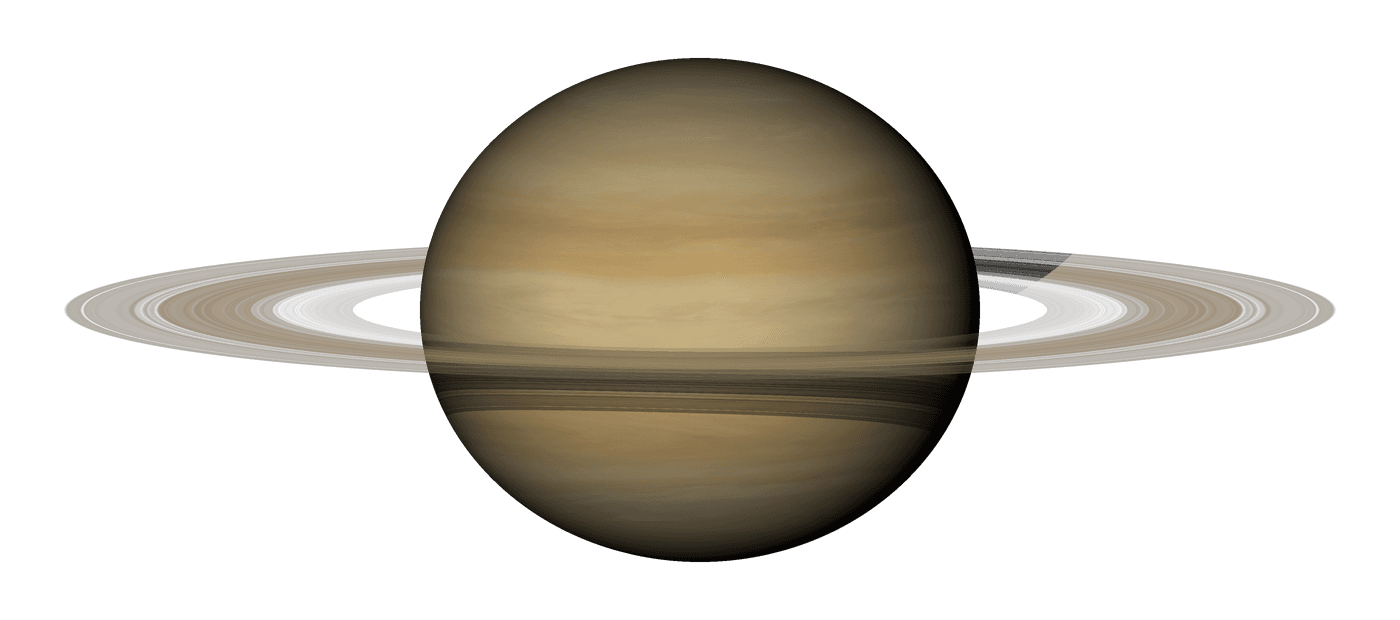
FIND IT TONIGHT · BANGKOK
Saturn in numbers
- 9.4 × Earth
- Width
- 10 h 33 min
- One day
- 29.4 years
- One year
- 0.69
- Grams per cubic centimetre on average. Water is 1.00, so Saturn would float.
- 293
- Known moons, more than any other planet (NASA, August 2026).
- ~10 m
- Typical thickness of the main rings, which reach 282,000 km out.
WORTH KNOWING
Its biggest moon has rain, rivers and lakes. None of it is water.
Titan is bigger than the planet Mercury and has a thick, hazy atmosphere. It is so cold that methane and ethane fall as rain and pool into lakes and seas.
NASA's Dragonfly, a nuclear-powered drone the size of a car, is planned to launch in July 2028 and reach Titan in 2034.
Who has been there
- 1979Pioneer 11First spacecraft to fly past Saturn.
- 1980–81Voyager 1 and 2Close flybys that revealed the rings' fine structure.
- 2004–17Cassini–Huygens13 years in orbit. Huygens landed on Titan in 2005.
- 2028 →DragonflyPlanned launch July 2028; arrives at Titan in 2034.